
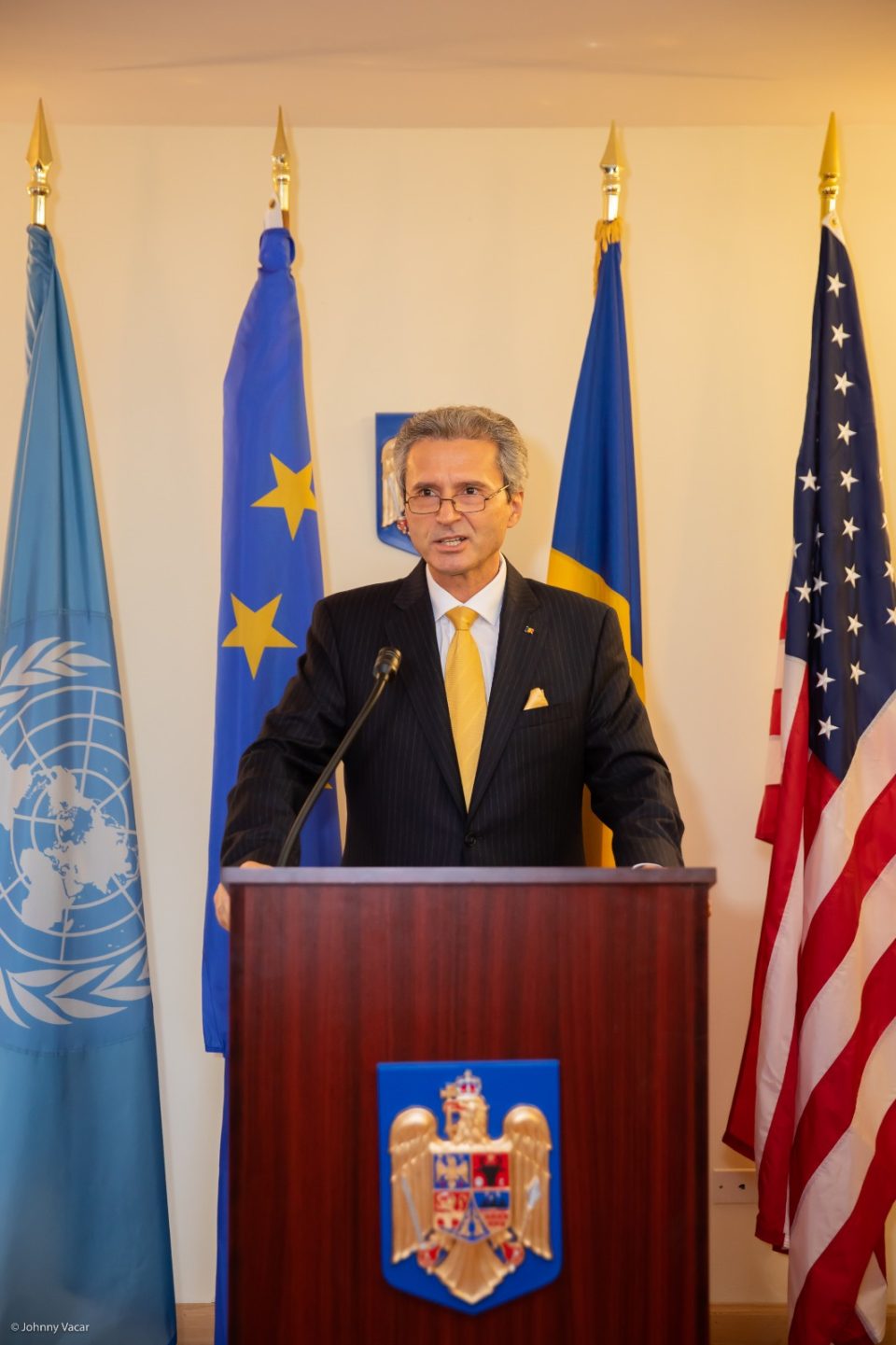
On 2 September 2026, at the initiative of Monaco, the Council of Europe conducted a captivating debate on “The environmental crisis through the lens of human rights: scientific findings, legal challenges and political prospects for the Council of Europe”. Linking human rights to environmental protection is not necessarily a new topic. The Declaration “United around our Values”, adopted in 2023, in Reykjavik, by the 4th Summit of Heads of State and Government of the Council of Europe, stated that: “Human rights and the environment are intertwined and a clean, heathy and sustainable environment is integral to the full enjoyment of human rights by present and future generations… The Council of Europe has both the tools and the structures to address human rights and the environment, in the spirit of co-operation and by sharing experience and promising practice.”
The Reykjavik Declaration sent a message of political will at a time when the age of climate lawsuits was beginning. In 2023, the first trial in US history concerning governments’ responsibility for climate change started in the state of Montana, and in 2024 a court in Hawaii held a similar case. Same year, the European Court on Human Rights ruled in two similar cases: in the first, the plaintiffs claimed that forest fires in Portugal were a direct result of global warming and affected their living conditions and health (Duarte Agostinho v. Portugal and 32 Other States); the second referred to Switzerland’s climate policy, considered insufficient by the plaintiffs to fight heatwaves (Verein KlimaSeniorinnen Schweiz and Others v. Switzerland).
In 2025, in a landmark advisory opinion, the International Court of Justice (ICJ) ruled that a clean, healthy, and sustainable environment is a precondition for the enjoyment of human rights – including the rights to life, health, food, water, and housing. Based on multiple legal sources – the UN Charter, the three core climate treaties (UN Framework Convention on Climate Change – 1992, Kyoto Protocol – 1997, and Paris Agreement – 2015), and the international human rights law – the ICJ found that States have the obligation to protect the climate system and the environment from anthropogenic greenhouse gas (GHG) emissions. This obligation includes mitigation, adaptation, and cooperation duties, guided by the principles of sustainable development, precaution, and intergenerational equity. Also in 2025, the Council of Europe adopted the “Strategy on Environment 2025–2030”, whose main objective is to integrate human rights into environmental policy.
These developments announced a paradigm shift, because until recently the environment degradation was considered in terms of Celsius degrees, tons of CO2 emissions and financial costs, rather than the loss of lives. Now, it is recognized that climate change is not only an ecological issue, but also a human rights concern. Indeed, we witness the highest quantity of greenhouse gas emission in the atmosphere in the last million years – which contributes to global warming; the world is losing 10 million hectares of forests every year (the size of Iceland) – deforestation affects fresh water resources, reduces forests capacity to store carbon and amplifies natural disasters; due to the climate crisis, one million of the planet’s estimated 8 million plant and animal species are at risk of extinction; and air pollution causes some 6.5 million premature human deaths every year.
What the Monaco meeting brought that was new is the launch of a reflection process regarding the possibility of adopting a standalone Council of Europe convention grounded in the right to a clean, healthy, and sustainable environment. As the Secretary General of the Council of Europe, Alain Berset, argued: “Europe is the fastest warming continent on Earth. Twice as fast as any other continent. Science has warned us for decades. The question before us now is political: how quickly are we prepared to turn knowledge into action? Because when we talk about fires and floods, we are not talking about the weather. These shocks weaken communities and deepen inequality. They threaten human rights, democracy, and the rule of law… A Council of Europe convention on the environment, built on the right to a clean, healthy, and sustainable environment would bring legal certainty, democratic legitimacy, and a common European framework.”
Earth’s climate has always changed throughout history, with alternating periods of warming and cooling, having massive impacts on flora and fauna. Just in the last 800,000 years, there have been eight cycles of ice ages and warmer periods, with the end of the last ice age about 11,700 years ago, marking the beginning of human civilization. Most of these climate changes are attributed to small variations in Earth’s orbit that change the amount of solar energy our planet receives. The CO2 released into the atmosphere from volcanoes is also mentioned among the causes. Based on these elements, climate sceptics suggest that global warming observed in recent decades is part of a natural cycle of weather and is not linked to human causes.
But scientists say that changes in the planet’s orbit cannot explain the rapid warming in the last century, and the CO2 released during eruptions is much smaller than the amount of carbon and other GHG emissions released from burning fossil fuel. NASA data reveal that current warming is occurring roughly 10 times faster than the average rate after an ice age, and carbon dioxide from human activities is increasing about 250 times faster than it did from natural sources after the last glacial period. According to the United Nations Intergovernmental Panel on Climate Change (IPCC): “Since systematic scientific assessments began in the 1970s, the influence of human activity on the warming of the climate system has evolved from theory to established fact.”
In the last 50 years, Europe has warmed at more than twice the global average rate. In 2025, 95% of European citizens experienced above-average annual temperatures, 70% of European rivers recorded below-average annual flow, European sea-surface temperature was the highest on record since 1982, 35% of Europe experienced extreme agricultural drought, and biodiversity loss has reached critical levels – out of 15,060 European species assessed, 1,667 are threatened with extinction, and 36% of their habitats are deteriorating. IPCC warns that a 1.5°C increase of temperature corresponds to more than 30,000 additional deaths in Europe, while the European Commission estimates that climate-related disasters already knock 1% off the European Union GDP, rising to 2.3% by 2050, and to 7% by the end of the century.
Two main options emerged from the debate in Monaco: either an expansion of the current legal framework, or a comprehensive assessment regarding the optimal use of the existing instruments. But the two paths are not mutually exclusive. 24 Member States of the Council of Europe have already enshrined a substantive right to a healthy environment in their constitutions, while others have adopted procedural guarantees. My country, Romania, recognizes the right to a healthy environment under Article 35 of its Constitution. The World Bank’s 2023 Country and Climate Development Report noted that “Romania is highly vulnerable to the risks of climate change, particularly floods and drought”. In the summer of 2026, the country was severely affected by heatwaves and the drop in the Danube’s water level, which led to the shutdown of the Cernavodă Nuclear Power Plant that supplies 20% of the total electricity generated in Romania. Therefore, it attaches great importance to finding effective solutions to the triple planetary crisis: climate change, pollution, and biodiversity loss.
The recent case-law of the European Court on Human shows both the potential and the limits of human rights adjudication in environmental matters. The Court has reaffirmed that strong national frameworks, scientific evidence, and transparent consultations with citizens and stakeholders remain central to effective environmental governance. At the same time, the Court has reaffirmed the principle of subsidiarity and the limits of extraterritorial obligations, reminding that environmental protection must be rooted in credible national systems and realistic expectations.
The wildfires, flooding and heatwaves that affected Europe in 2026 are proof that climate change has health, economic, and societal effects. In a period of economic difficulties and rocketing energy prices, we need adaptation measures with tangible effects in people’s lives, favoring instruments that produce measurable results, and making full use of the best practices. For instance, due to an efficient legislative framework, from 2005 to 2023 the number of premature deaths attributable to fine particle emissions in the European Union fell by 57%, above the initial 2030 target of a 55%. These gains were not dependent on a new human rights treaty. They resulted from technical standards developed by experts, scientific documentation, monitoring, investment, and sustained efforts by the public administrations to put those measures into practice.
The reflection on the opportunity for a possible new instrument in the field of human rights and the environment will continue within the framework of the Council of Europe Strategy on Environment. In parallel with this analytical exercise, it is important to consolidate and better use the existing tools. These include the Council of Europe Convention on the Conservation of European Wildlife and Natural Habitats (1979) – Bern Convention, and the Council of Europe Convention on the Protection of the Environment through Criminal Law (2025) – the first international legally binding instrument to address environmental crime, covering a broad range of criminal acts that aggravate the triple planetary crisis of climate change, pollution and biodiversity loss.
There are also several United Nations instruments connecting climate change and human rights. The Resolution 48/13 (2021) of the UN Human Rights Council recognizes the human right to a clean, healthy and sustainable environment, and UN General Assembly Resolution 76/300 (2022) consecrates the right to a clean, healthy and sustainable environment as a human right at the global level. In addition to the three core climate treaties, we can also mention the International Covenant on Economic, Social and Cultural Rights (1966), the UN Convention on the Elimination of All Forms of Discrimination against Women (1979), the UN Convention on the Rights of the Child (1989), the International Convention on the Protection of the Rights of All Migrant Workers and Members of Their Families (1990), and the UN Convention on the Rights of Persons with Disabilities (2006). The Council of Europe reflection process may complement the existing international legal framework.
In a previous piece (“Climate Crisis: Avoiding the End of History”, in The America Times, 28 November 2022; see also: imageofromania.worldpress.com), I wrote: “Climate crisis is no longer an abstract notion. In the last couple of years, it generated devastating consequences worldwide. It is increasingly exposing and exacerbating inequalities, as the most vulnerable groups to climate change are the least resilient to its economic impacts. National governments have particular responsibilities in climate negotiations, but they cannot solve the problem alone. A key role belongs to local communities – towns’ responses to the climate crisis are particularly critical, as over 50% of the world population lives in urban areas, and the number is expected to rise to 70% by 2050.”
Because, ultimately, the solution to reverse the negative trends in climate change, pollution, and biodiversity loss, is to move towards a sustainable global economy. This requires behavioral change and structural transformations. New climate and environmental measures must be fair and inclusive, based on genuine consultation with European citizens, proper impact assessments and sound scientific evidence, avoiding constraints to competitiveness and innovation, and taking into account social and economic realities in Europe. As the watchdog of human rights, the Council of Europe may contribute to creating a holistic approach to prevent human rights violations caused by climate change.
Strasbourg, September 2026
Dr. Ion I. Jinga
Note: The opinions expressed in this article do not bind the official position of the author.
